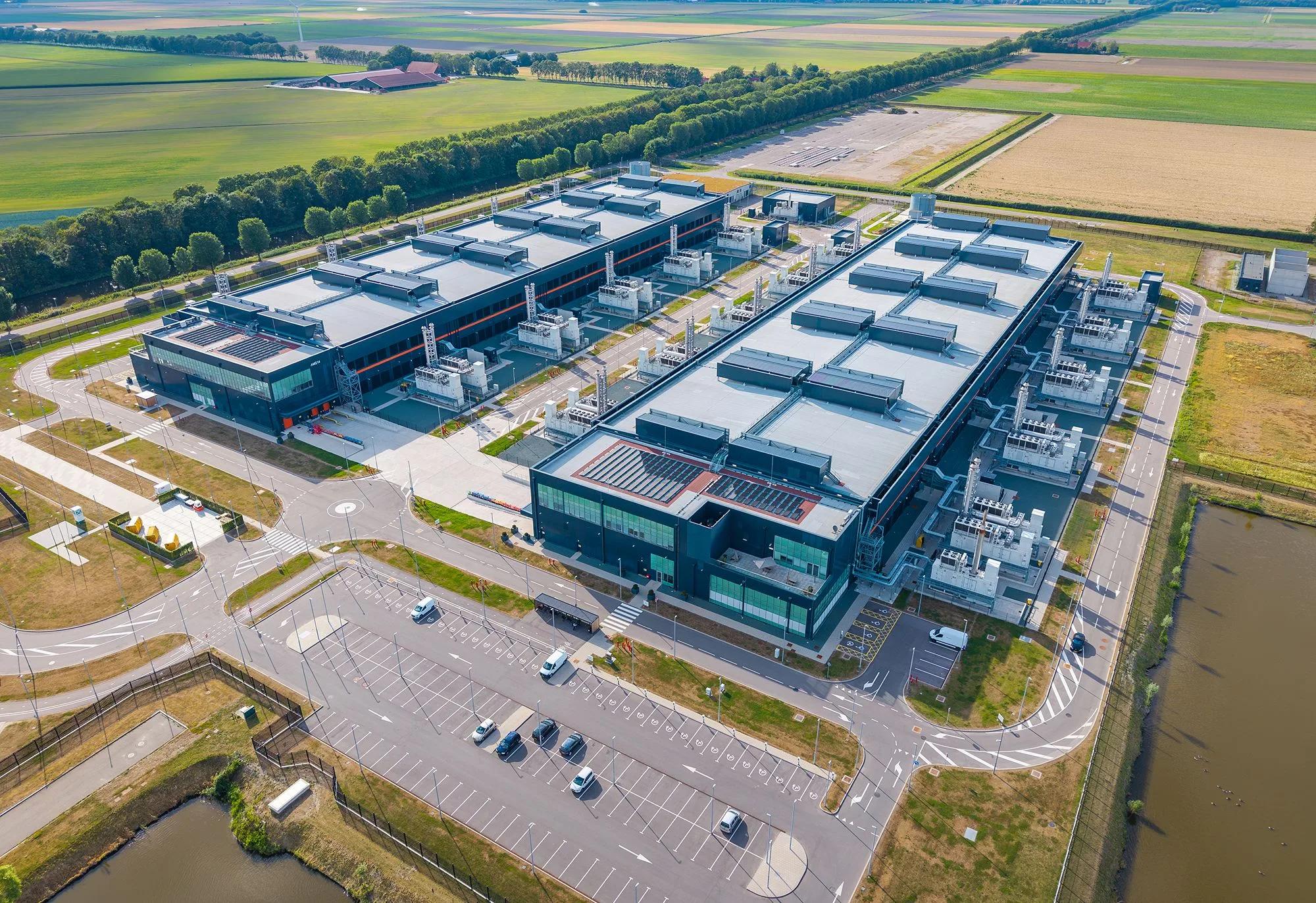
Protect generation from AI load volatility
Maximize every megawatt for AI
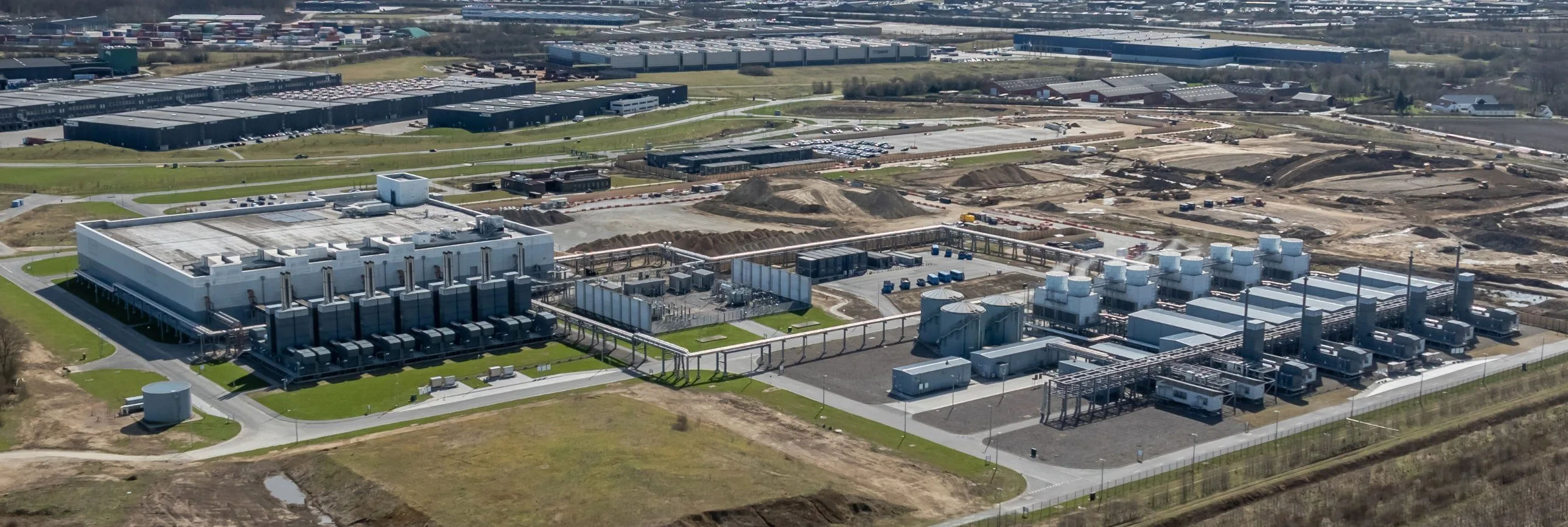
ZettaWatt™ for behind-the-meter power
The intelligent power control layer between behind-the-meter (BTM) power generation and AI compute. ZettaWatt™ buffers rapid AI load swings to help protect onsite generation assets, improve operating stability, and support scalable AI infrastructure.
Growing AI power requirements and grid capacity constraints are driving demand in behind-the-meter generation for data centers. However, rapid AI compute-load fluctuations can place significant mechanical and electrical stress on onsite generators and turbines, creating challenges for equipment reliability and stable power delivery.
DIMAAG’s ZettaWatt™ Power Platform provides an intelligent power buffer between AI compute loads and onsite generation. Combining an advanced DC power architecture, high-power Zenius battery storage, and Zifer real-time controls, ZettaWatt™ dynamically absorbs and supplies power as AI demand changes—reducing generator stress, stabilizing power delivery, and supporting reliable data center operations.
The challenge
Why AI load volatility challenges behind-the-meter power generation
AI training workloads can create large, cyclic changes in power demand over milliseconds to multiple seconds. On large utility grids, fluctuations are distributed across much larger systems. Behind-the-meter power generation can struggle to respond to rapid AI data center load fluctuations, creating challenges for generator stability, efficiency, and equipment longevity.
Rapid AI data center power fluctuations can strain onsite generators, reducing operating efficiency and increasing equipment wear.
AI load versus generation power
Measured on a 300 kW ZettaWatt test system, play-back at about 6× speed.
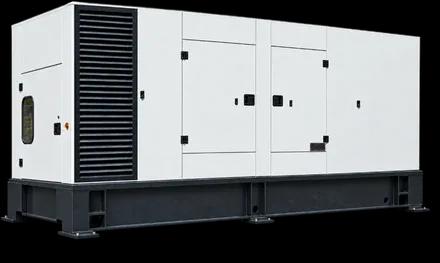
Without ZettaWatt
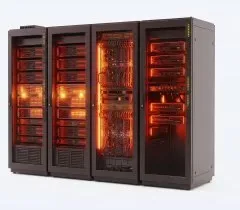
Rapidly fluctuating AI load
Generator-facing power without ZettaWatt, assumed
Without ZettaWatt, generation would be asked to follow every swing of the AI load, from about 270 kW down to about 40 kW every 21 seconds.
With ZettaWatt
Load smoothed to less than 1% ZettaWattSOC
Rapidly fluctuating AI load
Generator-facing power smoothed to less than 1%
With ZettaWatt, generation-facing power remains constant.
Why it matters
When onsite generation must follow rapid AI load fluctuations, the risks add up
- 01
Mechanical and thermal stress
Repeated ramping and torque changes from AI data center load fluctuations can increase stress on generation assets.
- 02
Maintenance and reliability exposure
High-frequency fluctuations can contribute to fatigue, maintenance demands and failure risk.
- 03
Operating instability
Fast, repeated AI load changes create a more challenging operating profile for onsite generation.
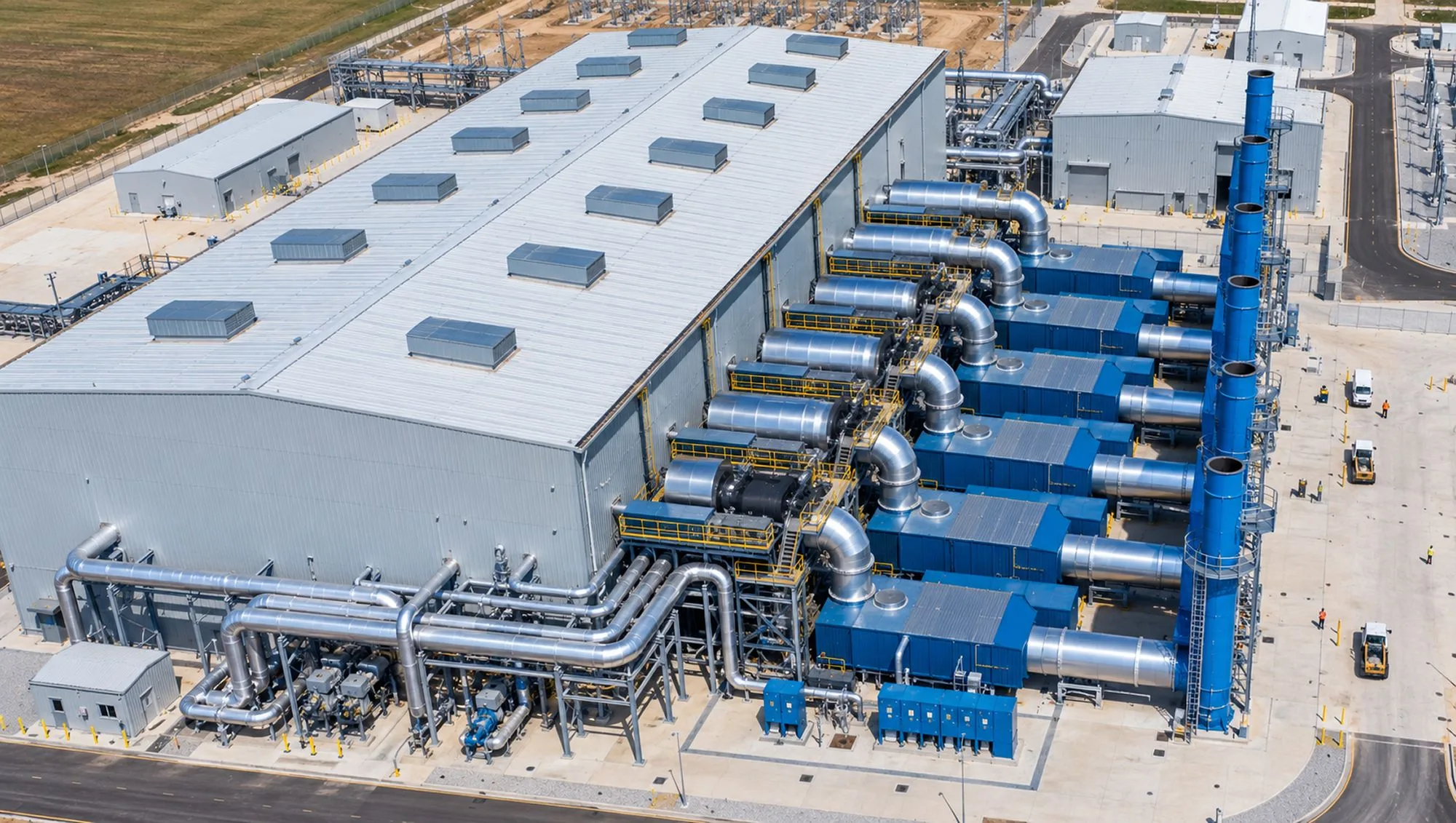
The ZettaWatt™ solution
Protecting behind-the-meter power generation from dynamic AI workloads
AI load fluctuations threaten power generation across the grid and onsite power generation. ZettaWatt™ serves as the intelligent behind-the-meter power management layer between behind-the-meter generation and AI compute by absorbing rapid AI demand changes before they reach the turbine, generator, fuel cells or other onsite and grid power sources.
Explore ZettaWatt Technology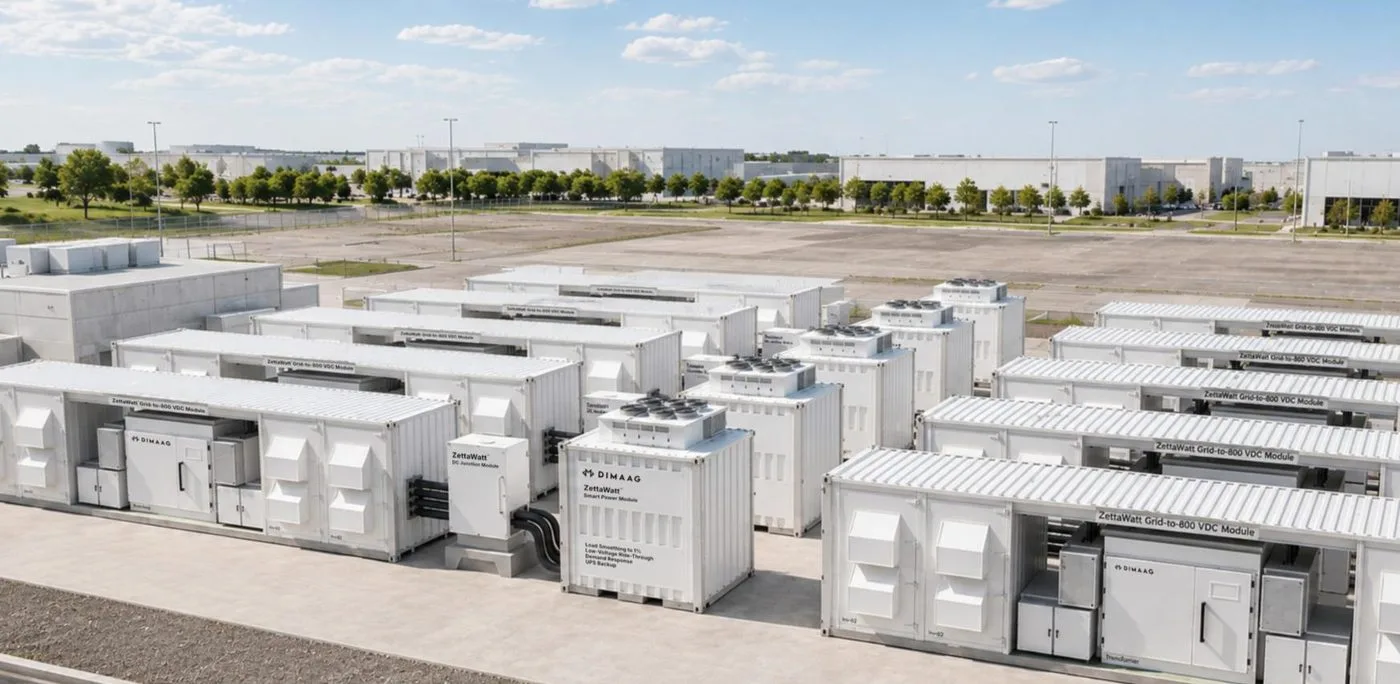
Technical proof
From volatile AI demand to stable source-side loading
→
DC-side load oscillation → AC-side variation
In DIMAAG’s demonstration, a greater than 70% oscillation in DC-side load was smoothed to less than 1% variation measured on the AC side. ZettaWatt buffers high-frequency compute-load changes, reducing the variation presented to the generation equipment.
| Measurement | Demonstrated results |
|---|---|
| DC-side load oscillation | >70% |
| AC-side variation | <1% |
Business outcomes
Protect behind-the-meter power generation and scale AI growth
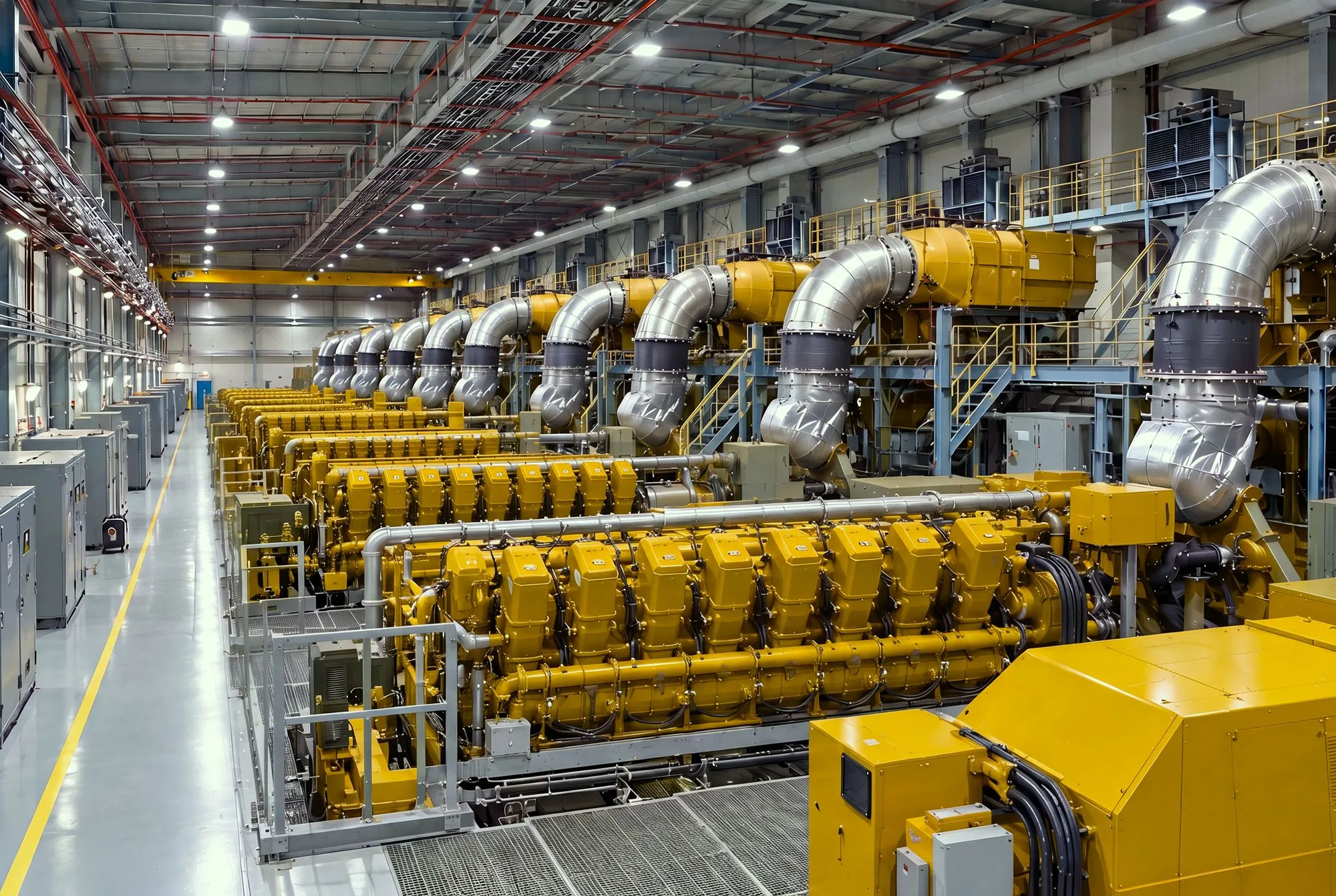
Protect generation assets & improve reliability
Shield onsite generators from rapid AI load fluctuations to reduce equipment stress, improve reliability, and extend asset life.
Improve operating stability
Let generation operate against a more predictable load profile while ZettaWatt responds to fast changes.
Differentiate your power offering
Pair generation with an integrated architecture designed for high-density AI infrastructure.
One architecture for 480 VAC and 800 VDC
ZettaWatt supports current 480 VAC distribution and next-generation 800 VDC AI rack architectures together, helping developers plan for both today’s infrastructure and evolving AI power requirements.
Power architecture
One coordinated architecture from generation to rack
A common DC bus connects power conversion, high-power storage, real-time controls and delivery to AI compute. ZettaWatt™ balances available sources and storage while coordinating generator ramp-up and ramp-down instead of relying only on discrete source switching.
- Onsite generation
- Power conversion
- High-power storage
- Real-time controls
- AI compute
Platform Technology
The technology behind ZettaWatt’s performance
Multiple generation sources
Designed to work with gas turbines, reciprocating engines, diesel generators, fuel cells, and other onsite power sources.
Integrated UPS capability
DC-coupled storage provides immediate backup response when needed.
High-power storage
DC-coupled Zenius storage supplies and absorbs power as AI demand changes.
Modular growth
Repeatable power blocks configured to match generation capacity and support phased expansion.
Intelligent energy management
Zifer EMS coordinates power targets, state of charge and available capacity.
Direct Dynamic Dielectric Cooling (D3C)
Integrated thermal management supports frequent high-power cycling.
Operational highlights
Fewer systems. Less space. Higher efficiency.
Integrated UPS
Built-in backup power eliminates the need for a separate UPS system.
No separate BESS required
Integrated DC-coupled storage buffers AI load fluctuations without a standalone BESS.
Reduced footprint
Consolidated power infrastructure saves valuable site real estate.
98.7% conversion efficiency
High-efficiency power conversion for 800 VDC racks minimizes energy losses.
AI training load fluctuations smoothed to <1%
Frequently asked questions
Behind-the-meter and ZettaWatt™ explained
Behind-the-meter (BTM) power uses onsite generation, such as natural gas engines or gas turbines, to supply some or all of a data center’s electricity needs. These systems can operate independently of the utility grid or in parallel with it, helping data center operators secure dedicated power capacity.
AI training and inference workloads can produce rapid changes in electrical power demand. Conventional generators and gas turbines cannot always respond as quickly as GPU-driven load changes occur. These fluctuations can create operating challenges for generation equipment such as stress and fatigue, making fast power buffering and coordinated energy management important.
DIMAAG’s ZettaWatt™ Power Platform combines DC-coupled Zenius energy storage, a common DC bus, and Zifer real-time controls to absorb and supply power as AI compute demand changes. This reduces the rapid load fluctuations experienced by upstream generators and turbines, helping maintain stable operating conditions.
DIMAAG demonstrated that a 70% DC-side load swing could be smoothed to less than 1% power variation at the AC-side interface, in a 300 kW live demonstration. The results demonstrate the platform’s ability to buffer rapid compute-load fluctuations before they reach upstream power sources.
DC-coupled storage allows batteries and power sources to be integrated through a common DC bus. ZettaWatt uses this architecture to dynamically absorb or deliver power as AI demand changes, providing fast load smoothing while integrating energy storage, power conversion, and real-time controls into one platform. The same DC architecture is designed to support future 800 VDC AI racks, enabling data centers to transition to next-generation power distribution without replacing the underlying power platform.
ZettaWatt integrates DC-coupled energy storage with uninterruptible power supply (UPS) and load-smoothing functions. This architecture is designed to eliminate the need for separate, standalone UPS and battery energy storage system (BESS) installations, reducing equipment complexity and footprint.
ZettaWatt uses a modular power architecture with repeatable power blocks that can be configured to match the capacity of onsite generation equipment. This supports integration with different generator and turbine sizes and enables phased expansion as data center power requirements grow.
Yes. ZettaWatt is designed to support today’s 480 VAC data center power distribution and emerging 800 VDC architectures for next-generation AI racks. This enables data center developers to plan for evolving power requirements while supporting current infrastructure.
Technical resources
Explore the engineering behind ZettaWatt
Your next step
Planning a behind-the-meter power generation project for AI?
Tell us about your power source, site capacity, and AI workload. We’ll help you evaluate the ZettaWatt™ behind-the-meter power architecture for your project.